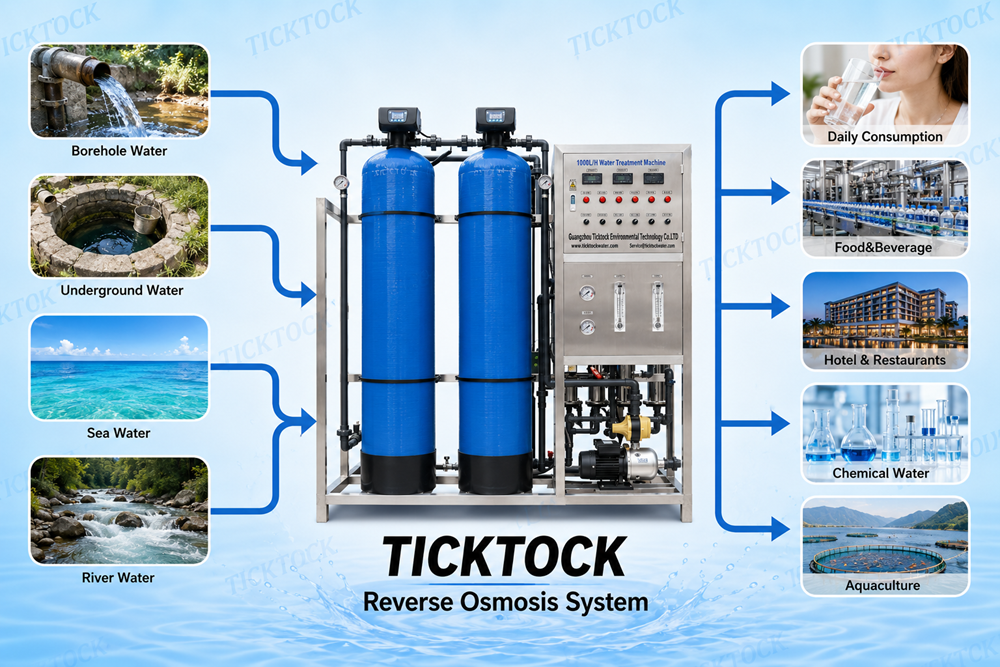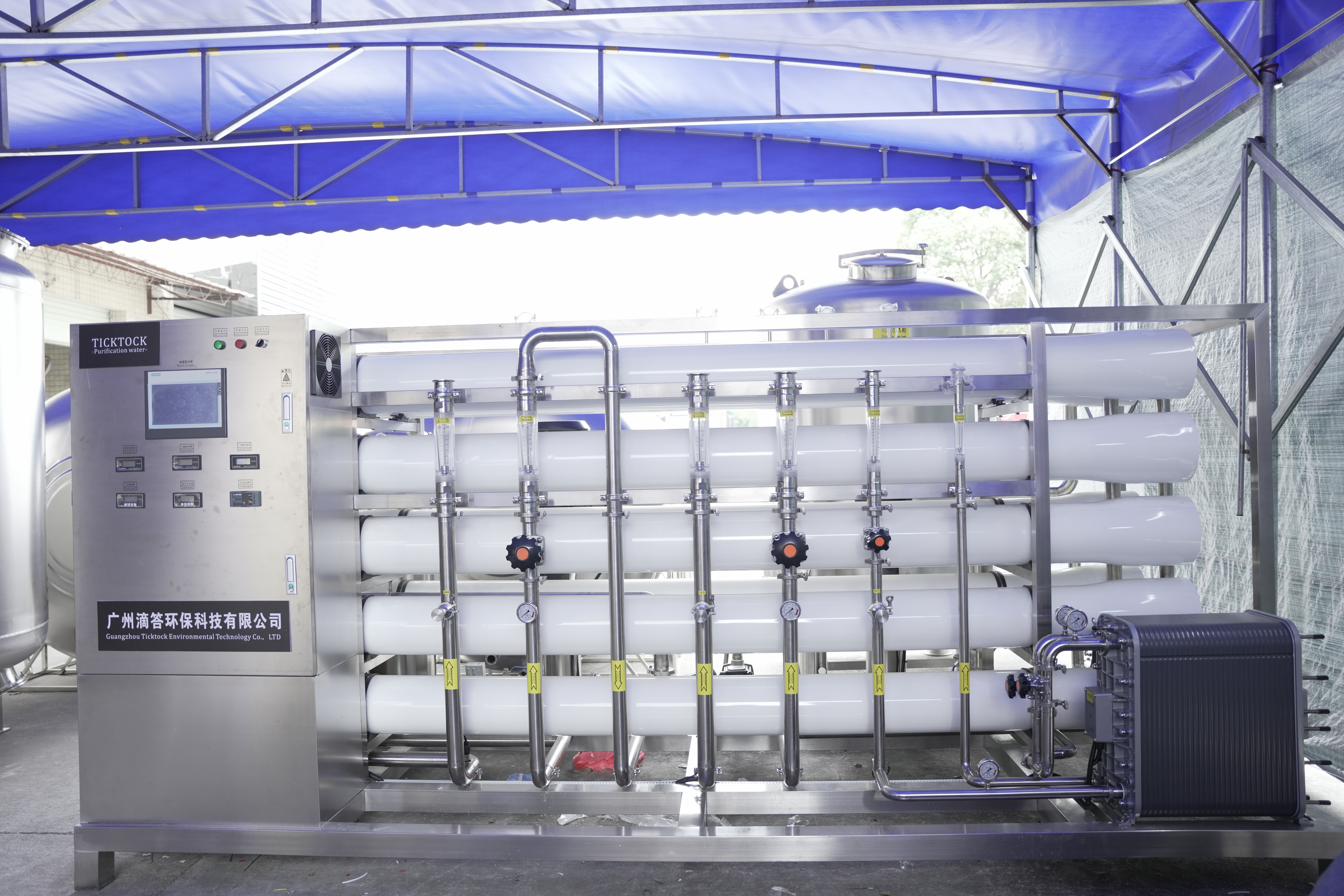
A bottling plant in Southeast Asia once called us with a familiar problem: their new filling line was leaving white spots on every bottle. The water looked clean. It came straight from the municipal supply. But within three months, two of their heat exchangers had scaled shut and a batch of product had to be recalled.
The cause wasn't bad luck. It was untreated water — water that looked fine but carried 320 mg/L of dissolved solids and a hardness of 180 mg/L as CaCO₃. Nobody had measured it, and nobody had treated it.
This guide explains what a water treatment system actually is, how the process works stage by stage, which numbers matter, and how to specify the right system for your plant.
Key takeaway
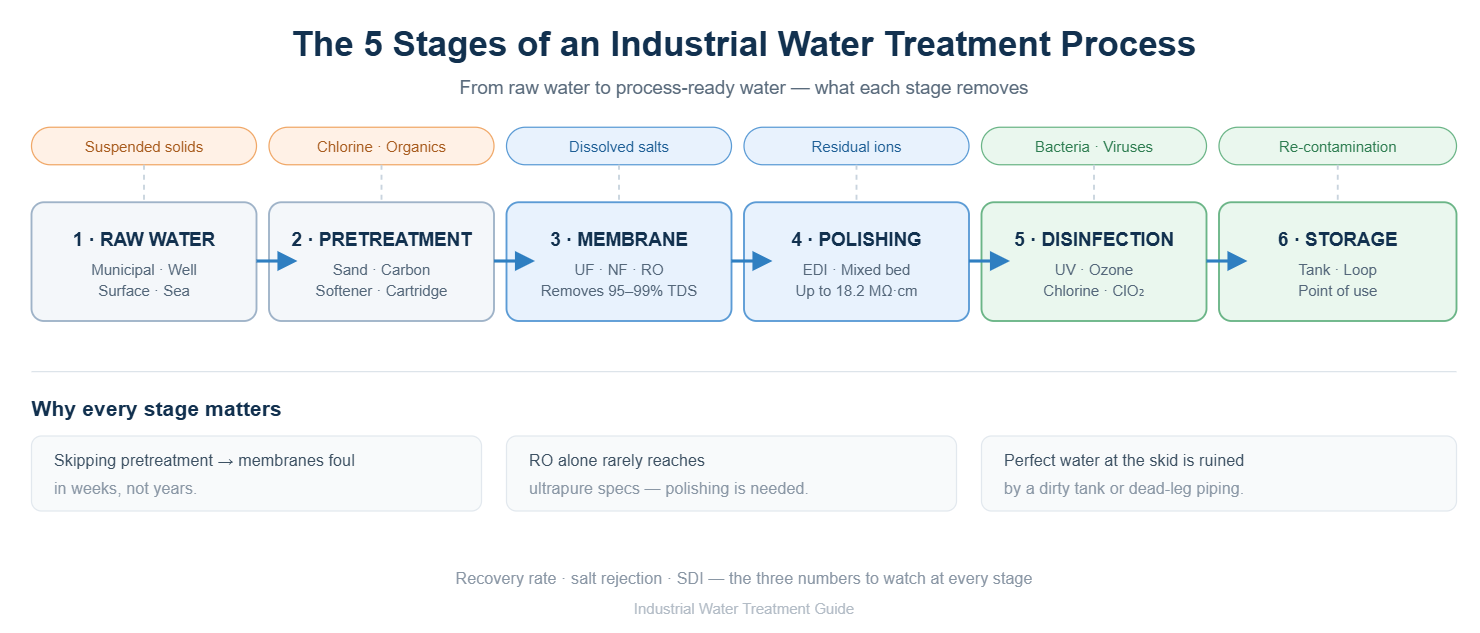
A water treatment system is a combination of physical, chemical and membrane processes that remove suspended solids, dissolved salts, hardness, organics and microorganisms from raw water until it meets a defined quality specification. Most industrial systems follow five stages: pretreatment → membrane separation → polishing → disinfection → storage and distribution. The exact configuration depends entirely on two things: your raw water analysis and your required output quality.
What Is a Water Treatment System?
A water treatment system is an engineered assembly of equipment — filters, membranes, resins, pumps, instruments and controls — that transforms a raw water source into water that is fit for a specific industrial purpose.
The key word is specific. There is no universal "clean water" standard. Boiler feed water, ultrapure water for electronics rinsing, and bottled drinking water are three completely different products, produced by three different system designs. A system that is perfectly adequate for a cooling tower will destroy a semiconductor rinse line.
Three things define every system:
- Source water quality — municipal, well, river, or seawater, each with its own contaminant profile.
- Required output quality — expressed as conductivity, hardness, TOC, bacterial count, or a pharmacopoeia standard.
- Capacity and duty — peak flow, operating hours, and whether the load is continuous or batch.
Get these three right and the equipment selection is straightforward. Skip the first one and no amount of good equipment will save the project.
Why Industrial Water Must Be Treated
Untreated water causes four categories of problems, and they rarely show up on day one.
Scaling. Calcium and magnesium precipitate on heat transfer surfaces once water is heated or concentrated. A 1 mm layer of scale can reduce heat exchanger efficiency by 8–10% and increase energy consumption accordingly.
Corrosion. Chlorides, dissolved oxygen and low pH attack carbon steel, copper and stainless steel. Corrosion failures are expensive because they usually appear as leaks inside walls or under insulation.
Product quality. In food and beverage, pharmaceuticals and electronics, water is an ingredient. Variations in conductivity, hardness or microbial count translate directly into rejected batches.
Compliance. Discharge permits and product-water standards (WHO, EPA, GB, USP, EP) are legal requirements, not suggestions.
The Five Stages of Industrial Water Treatment
Stage 1 — Pretreatment
Pretreatment protects everything downstream. Its job is not to purify the water, but to make it compatible with the membrane or resin that follows.
Typical equipment:
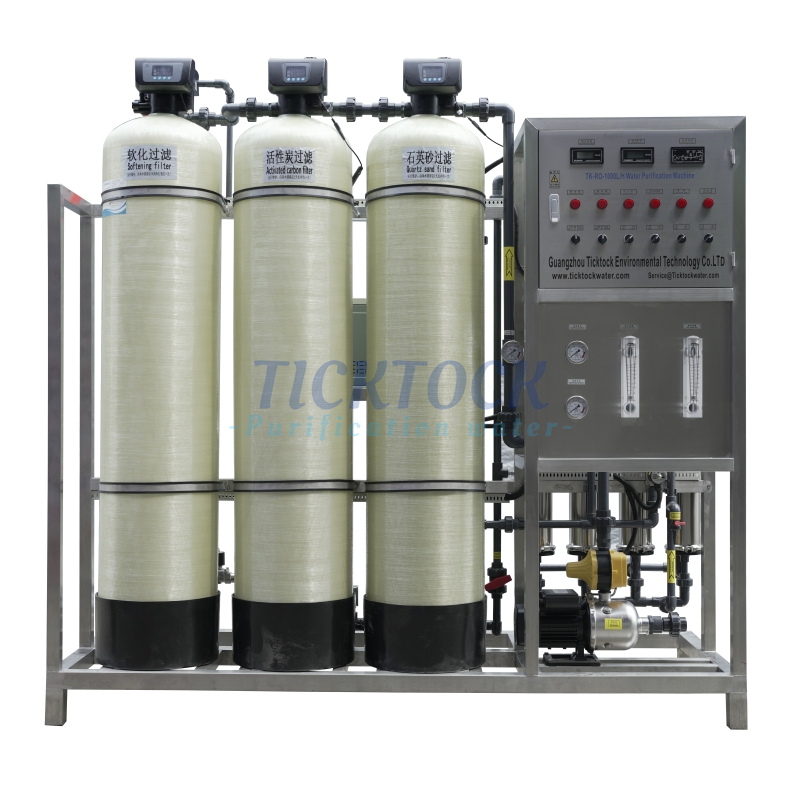
- Multi-media filter — quartz sand, anthracite and garnet layers remove suspended solids down to 10–20 µm.
- Activated carbon filter — adsorbs chlorine, chloramines, colour and many organics. Critical, because chlorine irreversibly damages polyamide RO membranes.
- Water softener — ion exchange resin swaps calcium and magnesium for sodium, eliminating scale-forming hardness.
- Cartridge (security) filter — a 5 µm or 1 µm final barrier that catches any carbon fines or resin fragments before they reach the membranes.
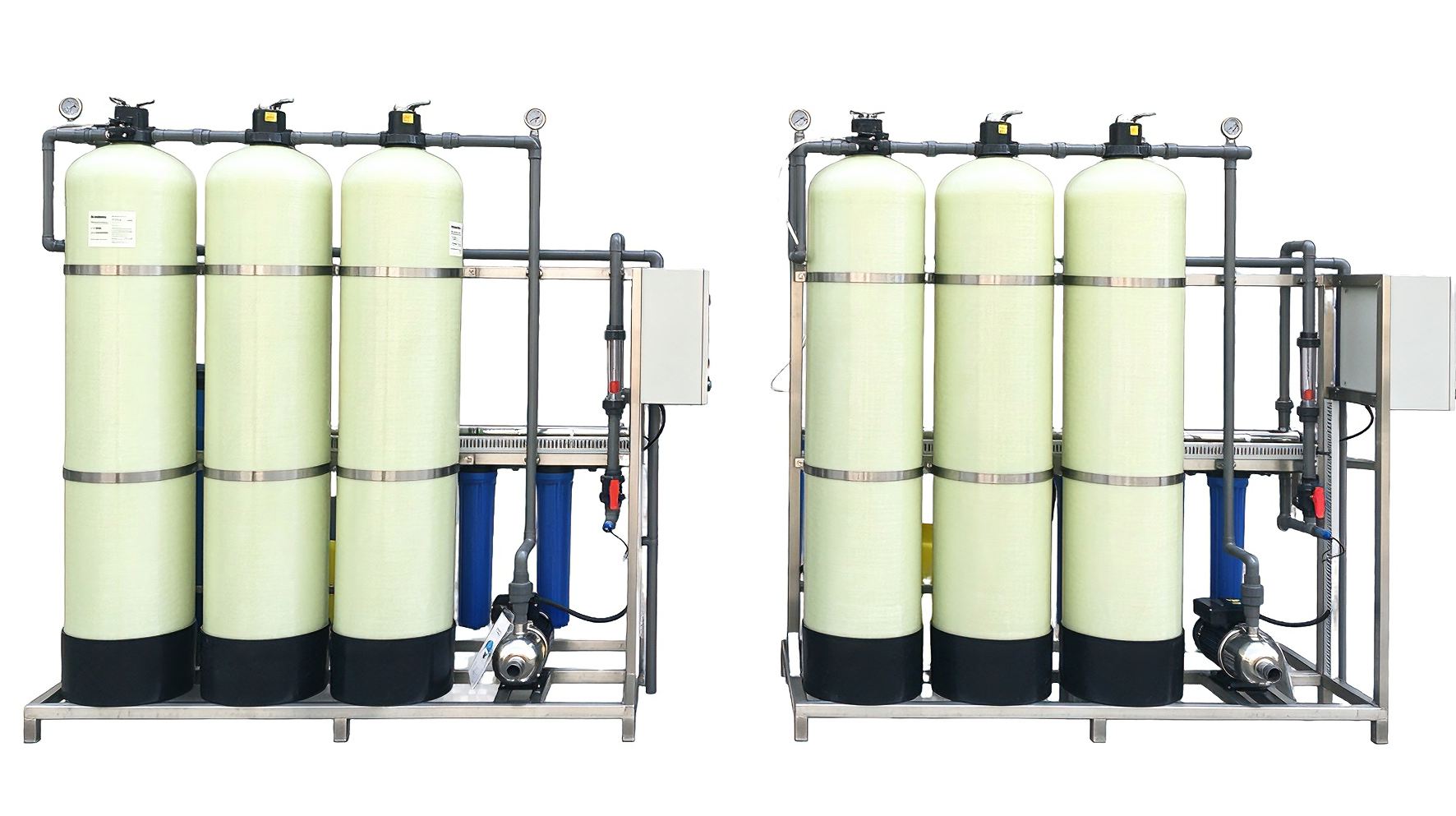
Skipping or undersizing pretreatment is the single most common cause of premature membrane failure. Membranes fouled by poor pretreatment do not fail gradually — they plug in weeks.
Stage 2 — Membrane Separation
This is the heart of most industrial systems. Pressure drives water through a semi-permeable membrane while contaminants are rejected and flushed to drain.
|
Membrane |
Pore size | Removes | Typical use |
|
UF (Ultrafiltration) |
0.01–0.1 µm |
Suspended solids, colloids, bacteria, macromolecules |
RO pretreatment, surface water, reuse |
|
NF (Nanofiltration) |
~0.001 µm |
Divalent ions, hardness, colour, some organics |
Softening, organics removal |
|
RO (Reverse Osmosis) |
<0.001 µm |
95–99% of dissolved salts, ions, organics |
Pure water, boiler feed, desalination |
RO is by far the most widely used. A well-designed brackish water RO system rejects 95–99% of dissolved salts, typically reducing conductivity from 500 µS/cm to under 30 µS/cm in a single pass.
Stage 3 — Polishing
RO permeate is "pure" by most standards, but industries like electronics, pharmaceuticals and power generation need better — often 1 µS/cm or lower. Polishing removes the last trace ions.
- Mixed bed ion exchange — cation and anion resins in one vessel; produces 0.1–1 µS/cm, but requires periodic chemical regeneration with acid and caustic.
- EDI (Electrodeionization) — combines ion exchange resin with ion-selective membranes and a DC electric field. Ions are continuously removed and resin is regenerated electrically, so no chemicals are needed. EDI typically delivers 5–15 MΩ·cm, and with downstream polishing reaches 18.2 MΩ·cm.
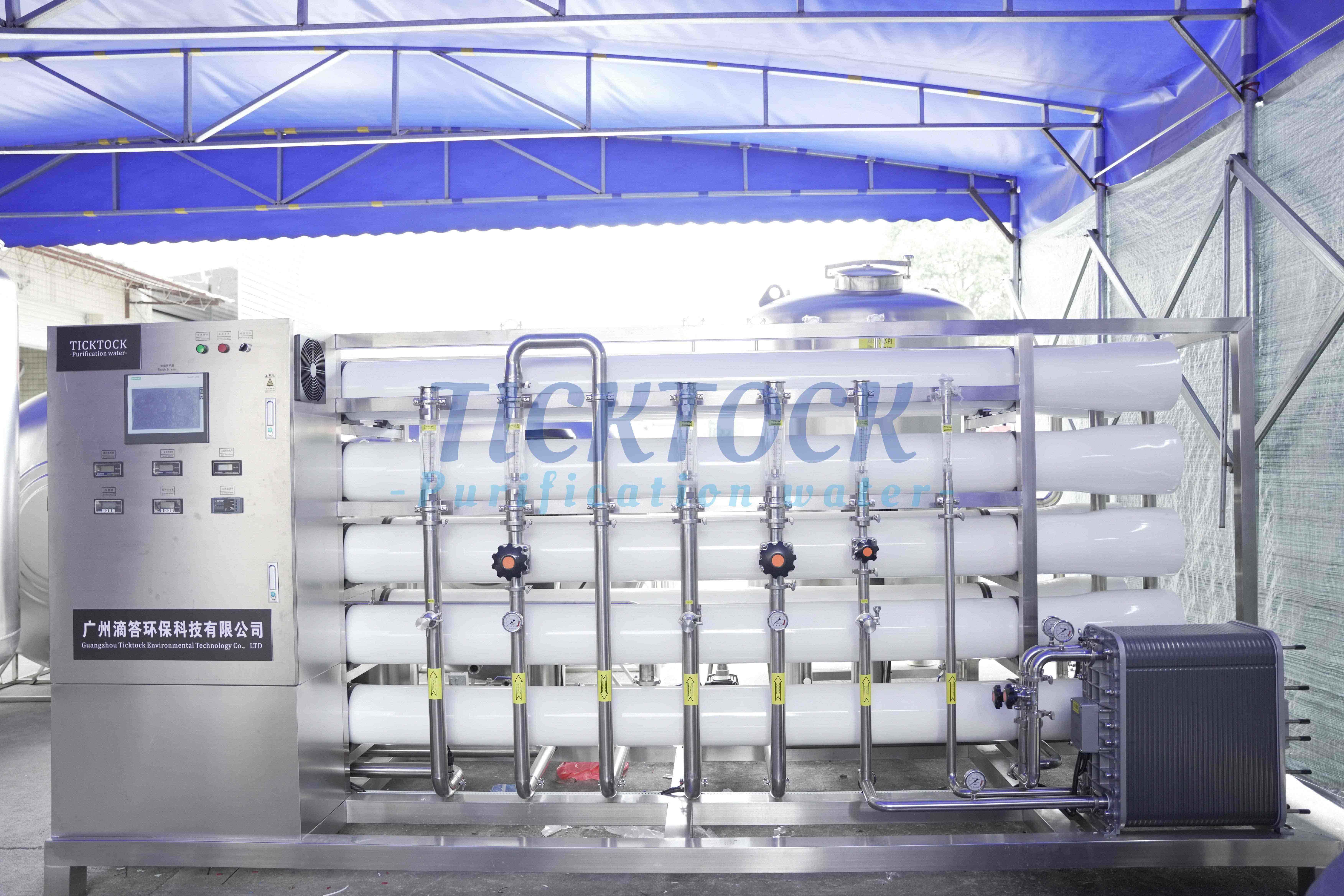
EDI has largely replaced mixed beds in new installations because it runs continuously, needs no chemical handling, and eliminates regeneration downtime and neutralization waste.
Stage 4 — Disinfection
Even chemically pure water can carry bacteria. Disinfection is mandatory for drinking water, bottled water, pharmaceutical water and any system with a storage tank.
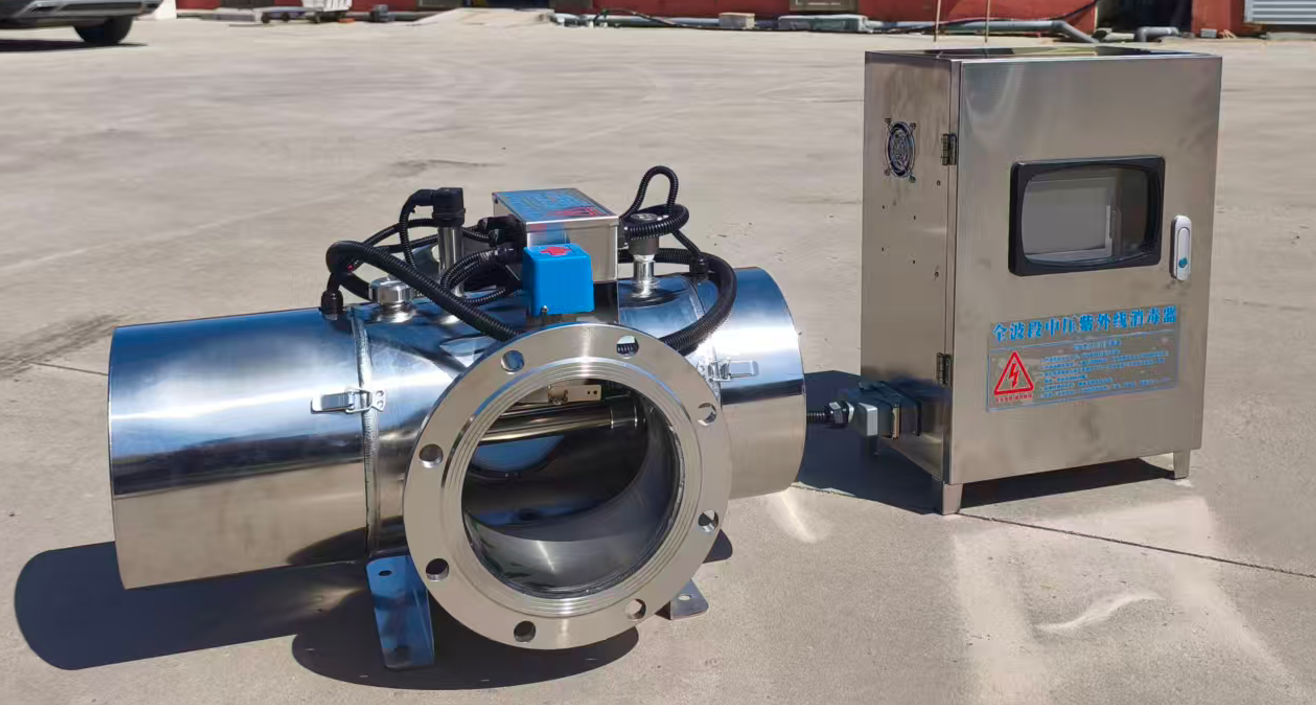
- UV (ultraviolet) — 254 nm light damages microbial DNA. No chemicals, no by-products, no taste change. Dose typically 30–40 mJ/cm² for drinking water.
- Ozone — powerful oxidant, effective against bacteria and viruses, also reduces TOC. Requires off-gas destruction.
- Chlorine / chlorine dioxide — provides a residual that protects the distribution loop, but must be removed before RO membranes.
Stage 5 — Storage and Distribution
Many systems produce perfect water at the skid and deliver contaminated water at the tap. Storage tanks, long pipe runs, dead legs and warm temperatures are where biofilms grow.
Good practice: use a sanitary tank with a 0.22 µm vent filter, keep the distribution loop circulating continuously (typically >1 m/s), use sloped piping with zero dead legs, and sanitize periodically.
Key Water Quality Parameters
|
Parameter |
What it measures |
Why it matters |
|
TDS (mg/L) |
Total dissolved solids |
Overall salinity; drives RO sizing |
|
Conductivity (µS/cm) |
Ionic content |
Fastest proxy for purity |
|
Resistivity (MΩ·cm) |
Inverse of conductivity |
Ultrapure standard: 18.2 MΩ·cm |
|
Hardness (mg/L as CaCO₃) |
Ca²⁺ and Mg²⁺ |
Scale formation risk |
|
pH |
Acidity / alkalinity |
Corrosion control, RO rejection |
|
SDI / MFI |
Fouling potential of feed |
Must be <5 for RO; <3 preferred |
|
TOC (ppb) |
Organic carbon |
Critical for pharma and electronics |
|
COD / BOD |
Organic pollution |
Wastewater discharge compliance |
Four Common Output Water Types
|
Type |
Conductivity |
Main treatment |
Typical application |
|
Softened water |
Unchanged from source (hardness ≈ 0) |
Ion exchange softener |
Boilers, washing, cooling |
|
Pure water |
5–50 µS/cm |
RO (single or double pass) |
Bottled water, food processing, general industry |
|
Deionized water |
0.1–1 µS/cm |
RO + mixed bed or EDI |
Plating, laboratories, cosmetics |
|
Ultrapure water |
0.055 µS/cm (18.2 MΩ·cm) |
RO + EDI + polishing + UV + degassing |
Semiconductors, WFI, power plant boilers |
How to Choose the Right System: A 5-Step Approach
[IMAGE 9 — Selection flow] Alt text: "Step-by-step flow for selecting an industrial water treatment system"
1.Get a full water analysis. At minimum: TDS, hardness, alkalinity, chloride, iron, manganese, silica, pH, SDI. A 30-minute lab test prevents a six-month mistake.
2.Define the output specification. Write it as numbers, not adjectives. "Very clean" is not a specification; "<10 µS/cm, hardness <5 mg/L" is.
3.Size for real demand. Calculate peak hourly flow, not just daily average. Add 15–20% margin for future expansion and membrane aging.
4.Check utilities and footprint. Power supply, drain capacity, compressed air, floor loading and ambient temperature all constrain the design.
5.Evaluate the supplier, not just the price. Ask for their design recovery rate, membrane flux, projected chemical consumption and spare parts list. A cheap quote with undersized membranes costs more over five years than a correct one.
Common Mistakes to Avoid
- Designing from a competitor's equipment list instead of your own water analysis
- Skipping the cartridge filter to save a few hundred dollars (it protects membranes worth thousands)
- Choosing RO only, when the real requirement needs EDI
- Ignoring concentrate (brine) disposal in the plant design
- Forgetting that a storage tank is the most likely source of bacterial regrowth
- Judging suppliers on equipment price alone, ignoring operating cost over 5 years
Next Step
The single most valuable thing you can do before contacting a supplier is to obtain a full raw water analysis. Send it to us and our engineers will return a preliminary process configuration, recovery rate estimate and budget range — free of charge.